

New Brunswick: Province puts pressure on local governments with property tax reforms
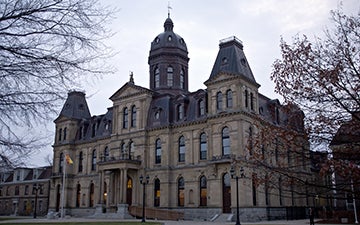
New Brunswick’s Liberal government has introduced a new system of municipal property taxation, publishing a public list of appropriate property tax rates
FREDERICTON, NB., May 29, 2026 – New Brunswick's Liberal government has introduced property tax reforms it hopes will stabilize people's bills and nudge municipalities into charging less when they set local tax rates.
The move is largely in response to homeowners fed up with unpredictable yearly tax hikes, driven by higher property assessments and, in the eyes of critics, municipal politicians who set the rates and know the higher assessments will reap them a huge tax windfall to spend.
Local Government Minister Aaron Kennedy said the changes would make New Brunswick's property tax system more accountable and transparent.
New property tax bills that go out next year will outline how much municipalities should be charging to reap their tax revenues and explain what they're spending extra money on if they go above the province's suggested tax rate.
"New Brunswickers have told us that they are worried about unpredictable property tax bills, unclear processes for property assessments, and confusion over where the money from the property taxes is being spent," Kennedy said at a news conference Wednesday morning, shortly before introducing a bill at the legislature to push through the changes.
"These amendments will help create a more stable, predictable, and transparent property tax system that New Brunswickers can trust, and local governments can rely on."
But the leader of the province's biggest municipal association said the measures would not properly correct inequities in the system between homeowners and big industry.
The opposition parties raised doubts the changes would make a big difference.
After consulting widely, hearing from experts in the field and looking at how other places impose property taxes, New Brunswick picked up ideas from several jurisdictions, including Calgary.
Arguably the most important change is providing taxpayers and municipal politicians a better idea of what tax rates should be, based on the services provided.
As it stands, the provincial government tells municipalities each year how much their tax base is worth, a figure that includes the value of rising property assessments and new properties. Municipal politicians then set their local tax rate based on the big tax base figure to come up with how much tax revenues they will take in.
Critics, such as former Service New Brunswick property assessor Jerry Iwanus, said the old system was a backward process that didn't force local politicians to start with a reasonable base budget and then justify real tax increases.
For instance, a local council could shave off several cents on a tax rate seemingly a tax cut — but still reap far more tax revenues thanks to higher property assessments.
From now on, the province will publish a publicly available list of the previous year's local tax rates, calculate a reasonable inflation amount, and come up with a new rate that it deems appropriate.
The inflation amount will be based on the consumer price index, population growth, the increase in New Brunswick salaries and wages, and a non-residential building cost index, all equally weighted.
If the politicians who run local governments still want to spend more money than the published rate, they'll have to justify the bigger tax rate increase, spelled out on people's tax bills.
A good example, Kennedy said, was the Town of Sussex, which recently decided it would have to charge people more to put in expensive flood prevention measures. All of this will be explained on future tax bills, he said, so that everyone is on the same page.
A former town manager of Quispamsis, where home prices have soared and people have complained about high property taxes, Kennedy said he noticed during the run up to New Brunswick's municipal elections May 11 that almost every candidate said they were in favour of lowering tax rates. Few politicians campaigned on higher taxes.
"If they want to see a lower tax rate, this supports them and gives the opportunity to do that," the minister said. "That's good news for the homeowners all across the province."
Brittany Merrifield had her doubts. The mayor of Grand Bay-Westfield, a town near Saint John, and president of the Union of Municipalities of New Brunswick, discounted the accountability measures.
She argued that municipalities were already the most transparent and fiscally responsible order of government. It is the only one that, by law, has to file balanced budgets every year instead of running deficits.
"These reforms really do fall short on achieving the government-stated commitment to fix the broken property tax system," she told Brunswick News. "I mean, we supported strongly the goal of creating a system that they called fair, transparent, predictable, and stable, but, in our opinion, today's reform, as presented, does not address many of the key priorities."
One of the association's big demands was to de-couple rates by allowing them to charge homeowners, smaller businesses and big industry different tax rates altogether.
It argues heavy industry is an extra cost burden for municipalities, requiring more services. Municipal officials also worry that rising property assessments for homes — far higher than rising assessments for industrial properties - shifts the tax burden onto long-suffering homeowners.
Kennedy said the province was reluctant to give municipalities this extra power, fearing they would tax heavy industry out of business and drive away investment that creates jobs and wealth.
Instead, the province has increased the multiplier rate at which heavy industry can be taxed. Before municipalities could charge between 1.4 times and 1.7 times the local rate. Going forward, they can choose anywhere between one and two times the rate, giving local politicians more flexibility.
On top of that, the province has promised to provide a new heavy industry revenue transfer grant to 28 municipalities that have factories, to take full effect in 2028. Right now, the province provides about $24 million for this kind of transfer, and presumably it would increase, though no final decisions have been made.
Merrifield, however, criticized the government for doing nothing about spike protection, which shields homeowners from tax hikes of more than 10 per cent a year, but evaporates as soon as they sell the home to someone else. She also slammed the government for doing nothing to get rid of special tax exemptions for some industrial properties.
There's little by way of reform to assessments tied to property values. New Brunswick's two municipal associations responded with outrage when the Liberals announced a one-year assessment freeze for the 2026 taxation year. They expected the one-year freeze would cost them up to $58 million.
A report commissioned by the province, prepared by the International Property Tax Institute, stated that New Brunswick already followed international norms, but recommended extending the time for filing a homeowner's appeal of an assessment. Taxpayers will now have 30 days instead of 21 to file an appeal of a property assessment review.
The leader of the Official Opposition said the Liberal government had introduced bills in the past that didn't measure up to the hype behind them and wondered if this one would similarly fall flat.
"There was a bill that was passed unanimously through the legislature, had great intentions to do well to protect our children, and we're still finding gaps," said Glen Savoie, interim leader of the Progressive Conservatives.
"So that's a very similar scenario here that we're looking at. At the legislature, we'll have to look at the bill and see what we can do to make sure that it does actually do what it purports to do."
Megan Mitton, a critic with the small opposition Green party, was most critical of the transfer grant for heavy industry, characterizing it as another example of provincial taxpayers subsidizing big business.
Iwanus, however, was pleasantly surprised by the changes. The retired property assessor was pleased to see the province seemed to have listened to the complaints he outlined in a self-published book on the topic.
He said the reforms should prod municipal politicians into being more accountable and justify what they are doing. Instead of an endless debate on how high the tax rate should be, Iwanus predicted the public conversation would shift more toward spending on public services.
"What they've had to this point is a focus on tax rates as the basis of the whole conversation. Now the conversation will be about the budget. How much are you spending? What are you spending on? Why is it going up this year?" he said in an interview, grinning.
"It's probably going to take 10 years or more for people to start recognizing that assessments and taxes are not as incestuously related as they have been for all of New Brunswick's history."
John Chilibeck is a Local Journalism Initiative reporter with The Daily Gleaner in Fredericton, New Brunswick. With files from Barbara Simpson. Title image: New Brunswick Legislature in Fredericton by Breau is licensed under CC BY-SA 4.0 (Wikimedia Commons).







(0) Comments