
Deloitte Cyprus exposed – Global accounting giant accused of faking papers to hide $10B for Russian oligarch

In the first of two articles, Canadian tax lawyer and accountant David J. Rotfleisch examines the schemes exposed by forensic analysis in accounting terms
Part 1, Assurance Failure or Concealment?
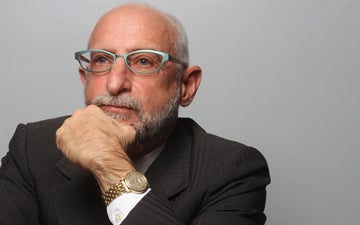 |
David J Rotfleisch, CPA, JD is the founding tax lawyer of Taxpage.com and Rotfleisch & Samulovitch P.C., a Toronto-based boutique tax law corporate law firm. |
On October 12, 2026, BBC Panorama, the Bureau of Investigative Journalism, The Guardian and the Organized Crime and Corruption Reporting Project published a joint investigation into leaked Cypriot corporate files. Their forensic analysis alleges that the Cyprus branch of Deloitte, and Meritservus, the firm spun out of it in 2005, fabricated and backdated more than 1,000 corporate documents for companies beneficially owned by Russian oligarch Roman Abramovich between 1999 and 2013, helping to conceal at least US$10 billion in assets and evade tens of millions of dollars in tax. The work is part of the Cyprus Confidential project organized by the International Consortium of Investigative Journalists and Paper Trail Media.
Everyone named denies wrongdoing. Abramovich says he had no knowledge of unlawful backdating and that reliance on Deloitte's advice was proper. Deloitte Cyprus says it acts in compliance with applicable law and cannot comment on documents more than twenty years old. The conduct described below is therefore reported and alleged, not proven, and the denials are set out in full at the end.
I write this as a chartered professional accountant rather than only as a tax lawyer, because the feature of this story that should hold the profession's attention is not the oligarch or the yachts. It is that, on the reporting, an auditor is alleged to have created the records it then attested to. A circular argument!
This first article sets out what Deloitte is alleged to have done, in the language of accounting and assurance.
The second article, to follow, examines how the same conduct would be analyzed under Canadian tax law and the CPA Code of Professional Conduct.
The structure the records were built to serve
The mechanics only make sense against the shape of the arrangement. Abramovich acquired the Russian oil company Sibneft in the 1990s and, as its value grew into the billions, moved his wealth offshore, principally through Cyprus and onward to holding companies in the British Virgin Islands. From 1999 his Cyprus affairs were administered by Deloitte's branch there, and from 2005 by Meritservus under Demetris Ioannides, who had chaired Deloitte Cyprus. By 2005 the firm was administering dozens of Abramovich entities under a single Cyprus trust of which Abramovich was beneficiary.
Critically for what follows, Deloitte and Meritservus personnel were reported to be acting simultaneously as nominee directors, nominee shareholders, administrators and independent auditors of the same companies, while, on the reporting, real decisions were taken by the client's staff in Moscow and London, principally his long-time lieutenant Eugene Tenenbaum and the trust administrator Irina Panchenko.
On the Cyprus side the files name Andre De Cort among the Deloitte and Meritservus personnel involved in the administration. That concentration of roles is the thread running through every scheme: on the account given, the people drafting the documents were also the people signing the accounts. Each of the individuals named denies wrongdoing, and their responses are set out at the end.
Four schemes, four accounting failures
Strip away the assets being hidden and four recurring techniques remain. Each is an identifiable accounting or assurance failure rather than a mere act of concealment.
1. Kravin Investments: recharacterizing passive income after the fact
In 2003, Kravin Investments, a Cyprus company holding part of the Sibneft stake, received roughly US$3 billion as the first instalment of a share sale. About US$2 billion of that sat in the company's own bank accounts, earning interest and, with it, a tax liability on passive income that should have cost millions.
The difficulty for those who did not wish to pay was that the money had demonstrably been in Kravin's accounts. As the reporting puts it, the bank ledgers already showed the deposits in Kravin's name and those entries could not be erased. What could be rewritten was the context around them. From 2005, paperwork backdated to 2003 was produced to make it appear that Kravin had transferred the funds almost immediately to another Abramovich company in the BVI, with a second backdated agreement casting Kravin as a mere trustee that had only ever held and invested the money on that company's behalf.
Fabricated correspondence between the two companies, and fabricated "annual reports" describing how the trustee had managed the money, completed the picture. Some of these documents appear not to have been created until 2008, half a decade after the events they purport to record.
In accounting terms, this is the substitution of a fabricated legal form for a documented economic substance. A company that earns interest on its own deposits has earned income. Dressing it after the fact as trustee income belonging to another entity does not change what happened; it misrepresents it. Reviewing the arrangement, financial crime barrister Andrew Mitchell KC concluded it was tax evasion, observing that if it had happened in England and involved millions, the authorities would be weighing a prosecution.
2. Amiscan Investments: making assets vanish from a balance sheet
In 2005, Deloitte circulated draft accounts for Amiscan Investments, a Cyprus company whose balance sheet carried more than US$600 million in luxury assets, including a Sussex estate, a London flat, a French château, aircraft and vessels. When the audited accounts were published, those assets had disappeared.
The trigger was a change in Cyprus disclosure rules that would have made Amiscan's holdings public.
The reporting describes an email exchange in which the trustees record a consensus that it would be "more prudent" not to disclose. Backdated agreements were then created to transfer the assets to Amiscan's BVI shareholder, Kelvedon Worldwide, as though the transfer had occurred in 2003. No cash changed hands, because none had.
Fabricated trust agreements and share certificates were produced to support the picture. The deception was not even internally consistent: on the files, Kelvedon did not own Amiscan at the date of the supposed agreement.
The assurance failure alleged here is the sharpest of the four.
According to the reporting, the firm's own draft accounts had itemized the very assets that then vanished from the audited version, and the firm nonetheless signed the revised accounts as giving "a true and fair view" of the company's financial position.
On that account, a firm that had itself prepared the earlier schedule would have had the means of knowing that the later one did not reflect the company's actual holdings.
Lord Prem Sikka, emeritus professor of accounting at the University of Essex, who reviewed the findings, is quoted describing this as a violation of the statutory duty to publish true and fair accounts. Whether the firm in fact knew is, of course, a matter the firm disputes, and nothing here should be read as a finding that it did.
3. Electus Investments: swapping one company for another
Electus Investments, the Cyprus company at the top of the structure, faced the same 2003 disclosure problem. Amiscan's fix was unavailable because there was no company above Electus to receive its assets.
The solution reported in the files was audacious in its simplicity: a second company of the identical name, Electus Investments Ltd, had been reserved in the BVI from 2002 and incorporated in 2003.
Years later, in paperwork finalized around 2008, the BVI Electus was simply substituted for the Cyprus original, moving more than US$10 billion in assets from one to the other at, as the reporting puts it, the stroke of a pen.
The one loose thread was a footnote in the UK accounts of a group company naming the Cyprus Electus as ultimate owner. The files describe the group weighing whether to recast that as an "oversight" or quietly change it in the next accounts, before settling on keeping the Cyprus company alive solely to hold that one visible entity.
For an accountant, the detail is telling: the group was managing the audit trail itself, deciding which records would be allowed to corroborate which story. Lord Sikka described the pattern as a "fiddle factory," in which transactions are backdated and retrospectively moved as a matter of routine.
4. PB Mediapower: manufacturing "earned" income
The fourth scheme ran in the other direction, creating income on paper rather than removing it. Abramovich wished to extract just under US$100 million from his Sibneft-owning companies in a way that, on an internal email, had to appear "earned" and had to avoid revealing the Cyprus network.
The solution was a set of backdated, fabricated consultancy agreements under which the companies paid an intermediary, PB Mediapower Enterprises, US$98 million for "consultancy services," and the intermediary paid Abramovich 99.9 percent of that as "commission" for acting as agent. The services were said to be advice on Sibneft share transactions that had, in fact, already taken place about a year earlier, which is why an older shell company had to be found to sign as the purported adviser. The commission was converted into some fifty promissory notes that Abramovich drew down over three years.
This is the fabrication of a commercial rationale for a distribution. The economic event was a payment to the beneficial owner; the consultancy agreements existed only to characterize it as something a company would deduct and an individual would receive as business income.
The common denominator
Across all four, the through-line in the reporting is not that the auditor missed a fraud but that the auditor is alleged to have been involved in constructing the actual records in the first place.
Alex Cobham of the Tax Justice Network, who reviewed the findings, is quoted putting it bluntly: on his reading this was not something the firm reluctantly went along with but something it appeared to be part of designing. That characterization is his; the firm denies wrongdoing.
An independent forensic accountant who reviewed part of the evidence drew the line precisely where an accountant should: there can be legitimate reasons to document an earlier transaction at a later date, but the document should bear the date it was actually signed while recording the true earlier effective date, and supporting documentation should not be backdated where the arrangements did not in fact exist on the dates claimed.
That distinction, between honestly recording history and manufacturing it, is where the Canadian analysis begins. It is also where a great many Canadian practitioners quietly misunderstand their own obligations, because the line is not "never document anything after the fact."
The second article takes up that distinction, the personal liability a Canadian accountant would face under section 163.2 for the conduct described here, the independence rules the arrangement offends, and why a document "dated as of" an earlier date can be entirely proper.
The Responses
All of those named above deny wrongdoing. Lawyers for Mr. Abramovich say he denied knowledge of or involvement in unlawful backdating, concealing assets or evading tax, and that his reliance on professional advisers including Deloitte was proper. Mr. Tenenbaum denied participating in, authorizing or knowing of improper backdating or the preparation of false accounts. Ms. Panchenko denied wrongdoing and said she had relied on professional advisers.
Lawyers for Mr. Ioannides said he was currently unable to read or respond to the questions put to him. Mr. De Cort declined to comment. Deloitte Cyprus said it acts in compliance with applicable laws and could not comment on documents more than twenty years old.
The reporting discloses no evidence of involvement by any Deloitte entity beyond its Cyprus branch, which operates within a network of independent member firms. Nothing in this article is intended to suggest that any allegation against any person named has been established.
David J. Rotfleisch, CPA, CA, JD, is the founding tax lawyer of Rotfleisch & Samulovitch P.C., a Toronto-based boutique income tax law firm (taxpage.com), and is certified by the Law Society of Ontario as a specialist in taxation. Contact David at david@taxpage.com. This is general information, not legal or accounting advice, and is current to the date of writing.







(0) Comments